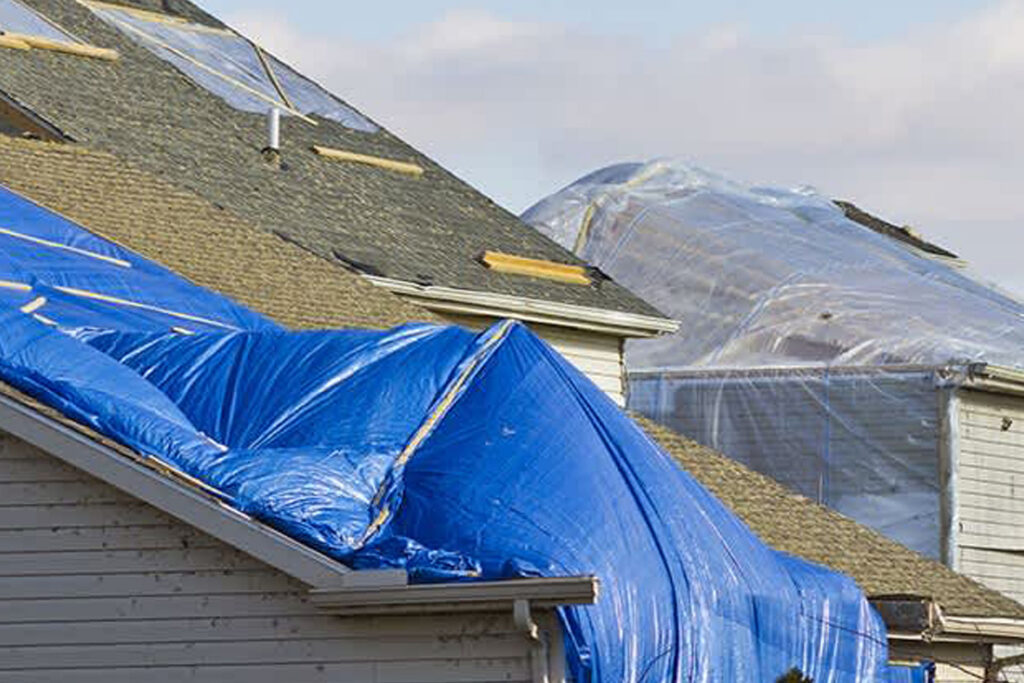
A bad storm rolls through the Charlotte area, and you notice something is off: a dark spot on the ceiling, granules piling up in the gutters, or a shingle sitting in the yard. The roof took a hit. Now what?
For most homeowners, the insurance claim process is unfamiliar territory. It moves fast, involves a lot of documentation, and has real consequences if you miss a step or accept a payout that does not cover the actual damage. This is a walkthrough of how the process works and how to protect yourself along the way.
Step 1: Do Not Wait to Document the Damage
The first thing to do after a storm is document everything before anything is touched or repaired. That means photos and video of your roof from the ground, your gutters, your downspouts, and anything inside the home that shows signs of water intrusion: stained ceilings, damp insulation, water in the attic.
Time matters here for two reasons. First, insurers may question whether damage was storm-related if you wait too long to report it. Second, temporary roof repairs you make to prevent further damage (tarping, for example) are generally reimbursable, but you need documentation that the underlying damage existed before those repairs were made.
If it is safe to do so, note the date and time of the storm. Your insurer will cross-reference it against weather data for your area.
Step 2: Call a Roofer Before You Call Your Insurer
This is the step most homeowners skip, and it often costs them.
A qualified roofing contractor can inspect the damage and give you an independent assessment of what is actually wrong before an adjuster arrives. That matters because adjusters work for the insurance company. They are generally fair, but they are not advocates for you. Having a contractor’s documented findings gives you a baseline for what the repair or replacement actually requires.
A good contractor will also help you understand what is covered under a standard homeowners policy. In North Carolina, most policies cover sudden storm damage: wind, hail, falling trees. They typically do not cover gradual deterioration or maintenance issues. Knowing which category your damage falls into before you file helps you set realistic expectations.
TrueFrame Roofing provides free storm damage inspections and can walk you through what we find before you take any next steps.
Step 3: File Your Claim Promptly
Most homeowners policies require you to report storm damage within a reasonable timeframe, and some have specific deadlines. Check your policy or call your agent to confirm the window.
When you file, have the following ready:
- Date of the storm
- Description of visible damage (use your photos)
- Any emergency repairs you have already made and their cost
- Your contractor’s inspection findings if you have them
Your insurer will assign an adjuster and schedule a roof inspection. In the Charlotte area after a major storm, adjusters can be backed up for days or weeks. That is another reason to have your own contractor assessment in hand so you are not relying solely on the adjuster’s visit to define the scope of damage.
Step 4: Be Present for the Adjuster Inspection
Do not skip this appointment. Walk the property with the adjuster and make sure they see everything your contractor documented. If there is interior damage, show them that too.
Bring your contractor’s written assessment. If the adjuster’s scope and your contractor’s scope differ significantly, you have the right to ask questions and, if needed, request a re-inspection or bring in a public adjuster to advocate on your behalf.
A few things worth knowing:
- Adjusters assess damage based on what they can see. If they miss something, it is harder to add it later.
- Depreciation is standard on older roofs. Most policies pay actual cash value (what the roof is worth today) rather than replacement cost unless you have an RCV endorsement.
- Your deductible applies before any payout. In North Carolina, hail and wind deductibles are sometimes separate from your standard deductible and calculated as a percentage of your home’s insured value. Read your policy carefully.
Step 5: Understand Your Settlement Before You Sign Anything
Once the adjuster files their report, your insurer will send an Explanation of Benefits detailing what they will pay and how they calculated it. Review it carefully before accepting.
Key things to check:
- Does the scope of work match what your contractor said is needed?
- Is the line item pricing reasonable for the Charlotte market?
- If your roof is being depreciated, is the holdback amount clearly stated and recoverable once work is complete?
If the settlement seems low, you can negotiate. Your contractor’s estimate is a legitimate basis for that conversation. Insurers are not always right on scope or pricing, and a documented second opinion carries weight.
What you should never do: sign over your claim to a contractor through an assignment of benefits agreement. This practice, where a contractor takes legal control of your insurance claim, has led to widespread fraud and disputes across the roofing industry. Reputable contractors do not require it.
Step 6: Get the Work Done and Close Out the Claim
Once you accept a settlement, schedule the repair or roof replacement promptly. Most insurers require the work to be completed within a set timeframe to release any depreciation holdback.
After the work is finished, your contractor should provide documentation of what was completed. Submit that to your insurer to trigger the final payment if depreciation was withheld. Keep copies of everything: the claim, the settlement, the contractor invoice, and the warranty paperwork.
How TrueFrame Roofing Helps With Insurance Claims
We have worked through hundreds of insurance claims for homeowners across the greater Charlotte area. We know how to document damage thoroughly, communicate with adjusters, and make sure the scope of work reflects what your roof actually needs.
We do not chase storms, pressure homeowners, or make promises about what your insurance will or will not cover. What we do is give you a clear, honest picture of the damage and stand behind the work once it is done, with Owens Corning and GAF materials and lifetime workmanship warranties.
If your roof took damage in a recent storm, start with a free inspection. We will tell you what we see, help you understand your next steps, and be available when the adjuster comes out.
We serve homeowners throughout the greater Charlotte area, including Mooresville, Kannapolis, Concord, Statesville, Salisbury, and Harrisburg.
Call (704) 492-2016 or request your free storm damage inspection online.