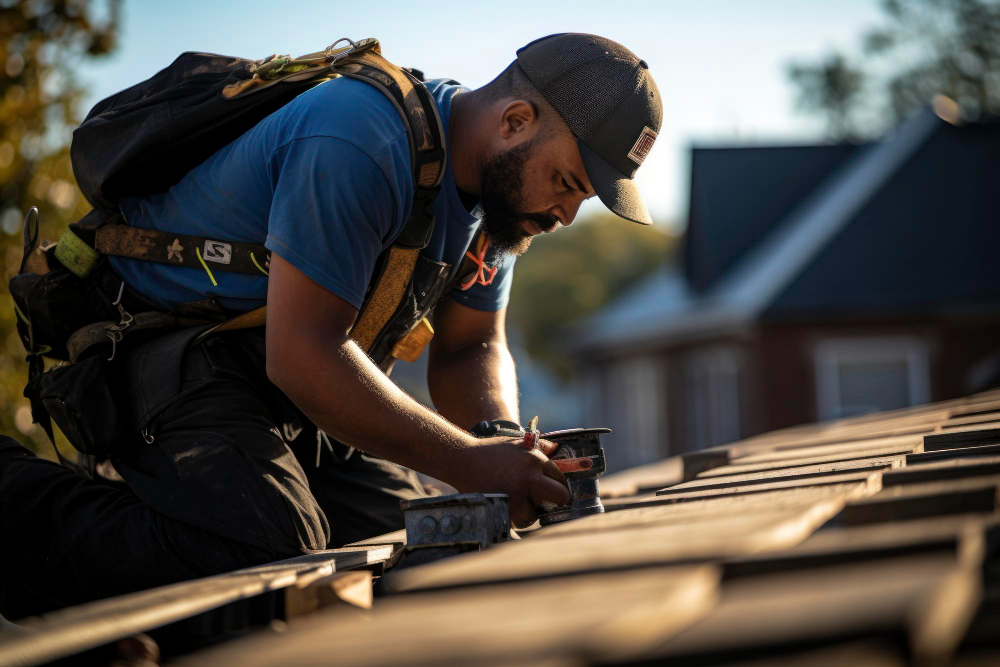
Charlotte summers are not gentle on a home. By July, attic temperatures can climb past 150 degrees, and that heat does not stay put. It radiates down through the roof deck, works its way into the living space, and forces the air conditioner to run longer and harder just to hold a comfortable temperature. For most homeowners in the area, cooling costs are the single biggest line item on a summer utility bill, and the roof plays a bigger role in that number than most people realize.
If your roof is nearing the end of its lifespan, planning a replacement gives you a chance to fix that. The materials, ventilation, and installation choices you make now can meaningfully lower cooling costs for as long as you own the home, not just for one summer.
How a Roof Affects Cooling Costs
A roof does three things that directly influence how hard your HVAC system has to work.
It absorbs or reflects solar heat. Dark, standard asphalt shingles absorb the majority of the sun’s energy and transfer much of it into the attic. Lighter colors and reflective granules bounce more of that energy back before it ever becomes a problem inside the house.
It ventilates, or fails to. Even the best shingle cannot compensate for an attic that traps heat. Proper intake and exhaust ventilation lets hot air escape instead of building up under the deck and pressing down into the insulation and ceiling below.
It insulates the transition between outside and inside. The roofing system, including the underlayment and any radiant barrier, forms part of the thermal envelope. Gaps or outdated materials in that envelope let heat move more freely into conditioned space.
When all three are working together, homeowners typically notice the difference in their utility bill within the first full cooling season.
Energy-Efficient Roofing Options Worth Considering
Cool roofing shingles. Manufacturers like Owens Corning and GAF now produce shingles with solar-reflective granules designed to reduce surface temperature without changing the traditional shingle look. These are a straightforward upgrade for homeowners who want efficiency gains without a dramatic style change.
Proper attic ventilation. This is often the highest-impact, lowest-cost improvement available during a roof replacement. A balanced system of intake vents at the eaves and exhaust vents at the ridge keeps air moving continuously, which prevents heat buildup and also protects the shingles themselves from premature aging caused by trapped heat.
Radiant barrier underlayment. Installed beneath the shingles, a radiant barrier reflects heat away from the roof deck before it can radiate into the attic. It is a strong option for homes with west-facing roof sections that take the brunt of Charlotte’s afternoon sun.
Lighter shingle colors. For homeowners open to a style change, lighter shades reflect more solar energy than darker ones. This matters more in Charlotte than in cooler climates, where the tradeoff between winter heat retention and summer heat rejection tips the calculation.
Proper insulation paired with the new roof. A roof replacement is a practical time to address attic insulation levels at the same time, since much of the attic is already exposed and accessible.
Why This Matters More in Some Charlotte Neighborhoods Than Others
Cooling costs and roofing needs vary across the greater Charlotte area depending on tree cover, home age, and sun exposure.
In newer developments around Mooresville and Concord, homes often have less mature tree canopy, which means roofs take on direct sun for more hours a day. Reflective shingle options and radiant barriers tend to make a bigger difference here.
Older neighborhoods in Salisbury, Statesville, and Harrisburg frequently have roofing systems that were never built with modern ventilation standards in mind. For these homes, a ventilation correction during replacement can solve comfort problems that homeowners assumed were just part of owning an older house.
In Kannapolis, where TrueFrame is based, mixed housing stock means the right approach really does depend on the individual home. This is part of why a site-specific inspection matters more than a one-size-fits-all recommendation.
What This Looks Like With TrueFrame
TrueFrame Roofing has spent 25+ years working on homes across the greater Charlotte area, and ventilation correction shows up in a large share of that work. A poorly ventilated attic is one of the most common issues found during inspection, and it is also one of the most fixable.
Every roof replacement includes an assessment of the existing ventilation system, not just the shingles on top of it. If intake or exhaust airflow is inadequate, that gets addressed as part of the project rather than left as an afterthought. Material selection is handled the same way: homeowners get options that fit both their budget and their goals for energy performance, without pressure toward the most expensive tier of product.
Schedule a Free Energy Assessment
If your summer cooling bills feel out of proportion to your home’s size, or if your roof is approaching 15 to 20 years old, it is worth finding out whether the roof itself is part of the problem. TrueFrame Roofing offers a free roof inspection that includes an assessment of attic ventilation, insulation condition, and material performance, with clear recommendations for improving energy efficiency.
Call (704) 492-2016 to schedule your free assessment.
TrueFrame Roofing serves homeowners throughout the greater Charlotte area, including Mooresville, Kannapolis, Concord, Salisbury, Statesville, and Harrisburg.